Computer Network - Network Overview
Features
Interconnection - No Master-Slave Relationship
Autonomy - Interconnectivity
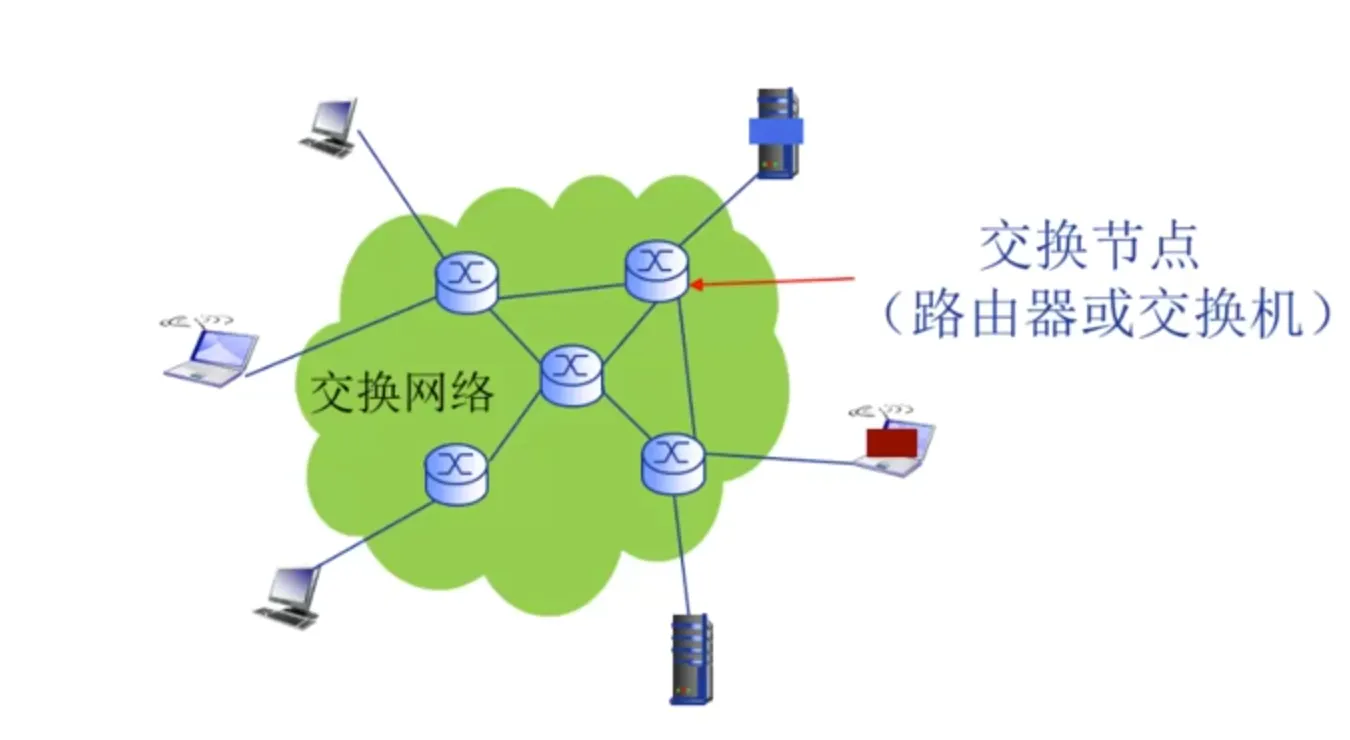
Exchange Network interconnects hosts via Switching Nodes to complete data communication.
Network Protocols
Network Protocol, is a rule, standard, or convention established for data exchange in progress.
Three Elements
Syntax: Protocol structure or format
Semantics: What control information needs to be sent, error control
Timing: Event sequence, speed matching
Authoritative Internet Protocol RFC
Network Edge Access Core Network
Access Network Three Elements:
- Computing devices accessing the network
- Communication links
- Packet switching (Routers, Switches)
Access Network Methods:
- Residential
- Institutional Access Network
- Mobile Access Network
| Access Method | Simple Understanding | Main Features |
|---|---|---|
| Fiber Access (FTTx, e.g., FTTH Fiber To The Home) | Fiber directly to community/building/home | Large bandwidth, low latency, many home broadband services are now FTTH |
| Cable Modem | Use cable TV coaxial cable to access internet | Once popular, faster than ordinary telephone lines, now gradually replaced by fiber |
| DSL (Digital Subscriber Line) Access (ADSL/VDSL) | Phone line can also access internet (ADSL Modem) | Once common, now gradually eliminated (slow speed, poor upload) |
| Ethernet Access | Plug in network cable at home/company (RJ45 interface) | Highest popularity, low cost, fast speed (now generally 100M/Gigabit) |
| LAN (Local Area Network) Access | Internal network, school/company uses switches/routers to connect | Local internal high-speed connection, usually combined with Ethernet |
Network Core Interconnection
- Routing: Routing Algorithm
- Forwarding: Switch packet from router's input port to correct output port
ISP (Internet Service Provider) Interconnection
Peering Link: Uses BGP protocol, BGP stands for Border Gateway Protocol, a protocol for exchanging routing information between different Autonomous Systems (AS).
Peering Link is not used within the same AS
Upstream Link (Transit Link)
IXP (Internet Exchange Point)
                   🌍 International Internet Backbone Network (Tier 1)
        ┌────────────────┬────────────────┐
        │                │                │
┌───────▼───────┐  ┌─────▼─────┐  ┌───────▼───────┐
│  Level 3 (US) │◄►│  NTT (JP) │◄►│  Telia (EU)   │
86: └───────────────┘  └───────────┘  └───────────────┘
87: 		▲                ▲                ▲
88: 		│ Private Peering │ Private Peering│
89: 		▼                ▼                ▼
90: ┌────────────────────────────────────┐
91: │     National/Regional Backbone (e.g. China Telecom)    │
92: └─────────────────┬──────────────────┘
93: 									│
94: 							┌────▼────┐
95: 							│   IXP   │ ← Domestic IXP: CHN-IX, HKIX etc.
96: 							└────┬────┘
97: 		┌───────────────┼───────────────┐
98: 		│               │               │
99: 		┌─────▼─────┐   ┌─────▼─────┐   ┌─────▼─────┐
100: 		│   ISP A   │◄──►   CDN     │◄──► Content Platform   │
101: 		└───────────┘  Peering Links └──────────────┘
102: 		│
103: 		┌─────▼─────┐
104: 		│  User PC  │
105: 		└───────────┘
Large Interconnected Networks:
Tier-1 ISP (Unicom, Telecom)
Content Provider Networks (Google: Private network, its data centers connect to Internet, usually bypassing Tier-1 ISPs and regional ISPs)
Small operators access global network via IP Transit to access the entire Internet.
Dynamic Switching
Multiplexing
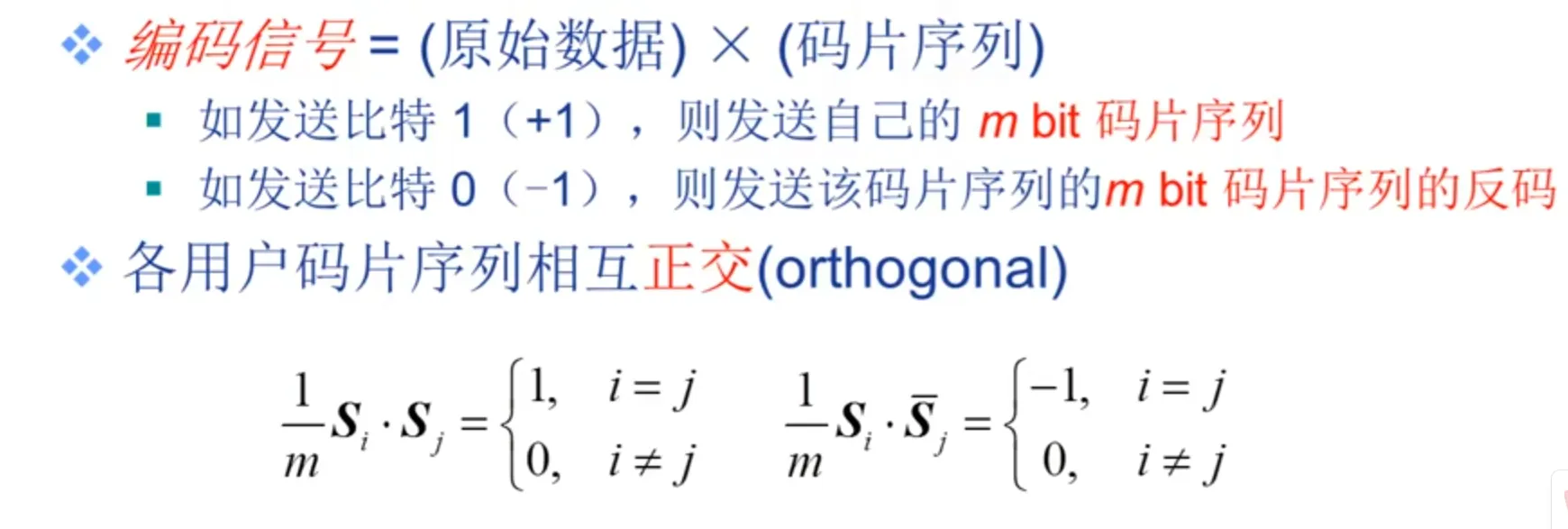
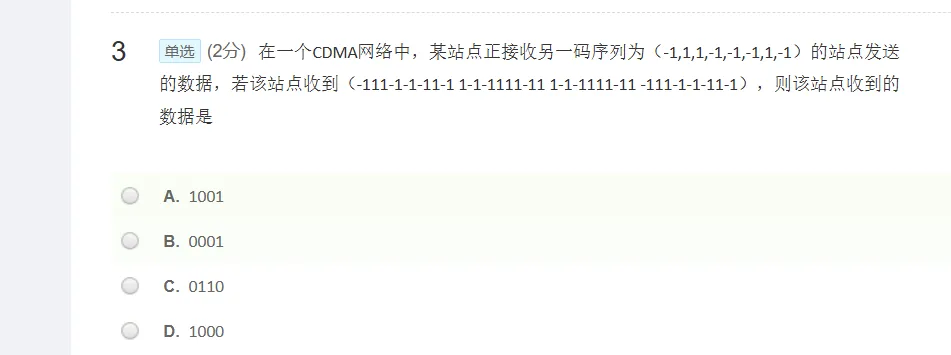
FDMFrequency Division MultiplexingTDMTime Division MultiplexingWDM(ActuallyFDM) Wavelength Division MultiplexingCDMCode Division MultiplexingEncoded Signal = Original Data X Chip Sequence
- Circuit Switching
- Establish Connection (Call/Circuit Setup)
- Communication
- Release Connection (Teardown Circuit)
Exclusive Resources (Multiplexing)
One fiber is greater than resources needed for one phone call
- Message Switching
Must send the entire packet, too slow, also occupies switch memory
- Packet Switching (Mainstream)
Allow more users to use the network simultaneously;
Store-and-forward switching mode
Suitable for bursty data transmission networks
Layered Network Structure
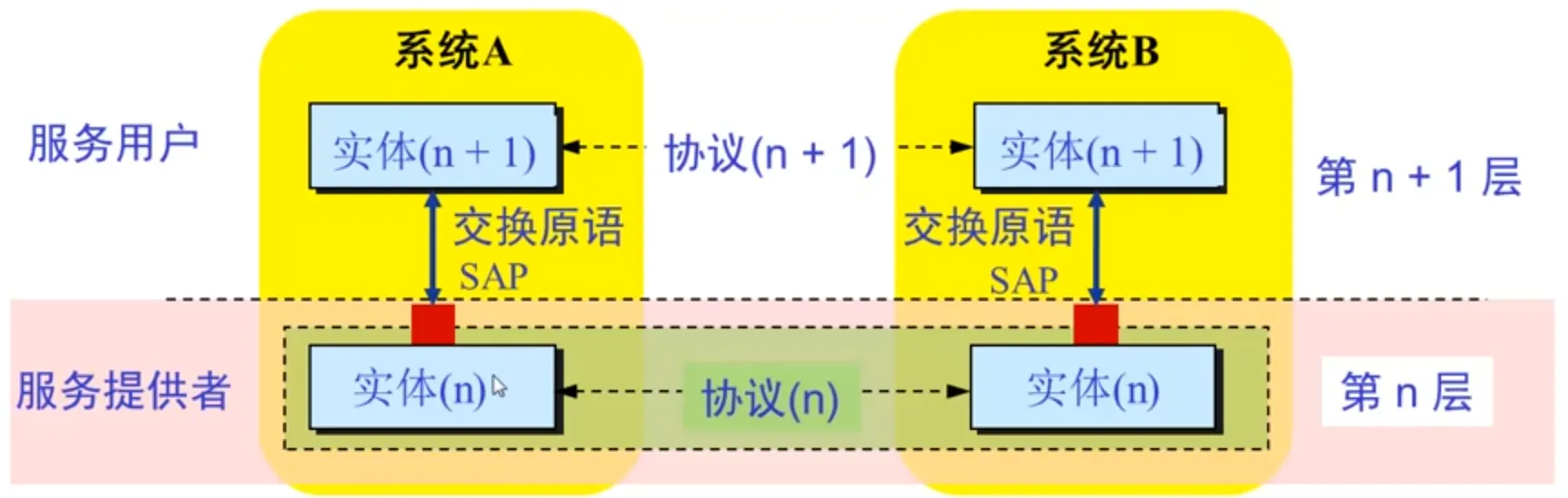
OSI Model
Open System Interconnection: Heterogeneous network system interconnection
| Layer Name | Function | Description |
|---|---|---|
| Physical Layer | Interface Characteristics, Bit Verification, Data Rate, Bit Synchronization, Transmission Mode | Bit Transmission |
| Data Link Layer (Non-end-to-end) | Framing, Physical Addressing, Flow Control, Error Control, Access Control | Data transmission between adjacent network elements (hosts, switches, routers, etc.) |
| Network Layer (Non-end-to-end) | Routing, Packet Forwarding | Data packet routing and forwarding from source host to destination host |
| Transport Layer | Segmentation and Reassembly, SAP Addressing, Connection Control, Flow Control, Error Control | Ensure message submitted to correct process, e.g., port number |
| Application Layer | FTP, SMTP, HTTP | Support users using network via user agent or network interface |
TCP/IP Model
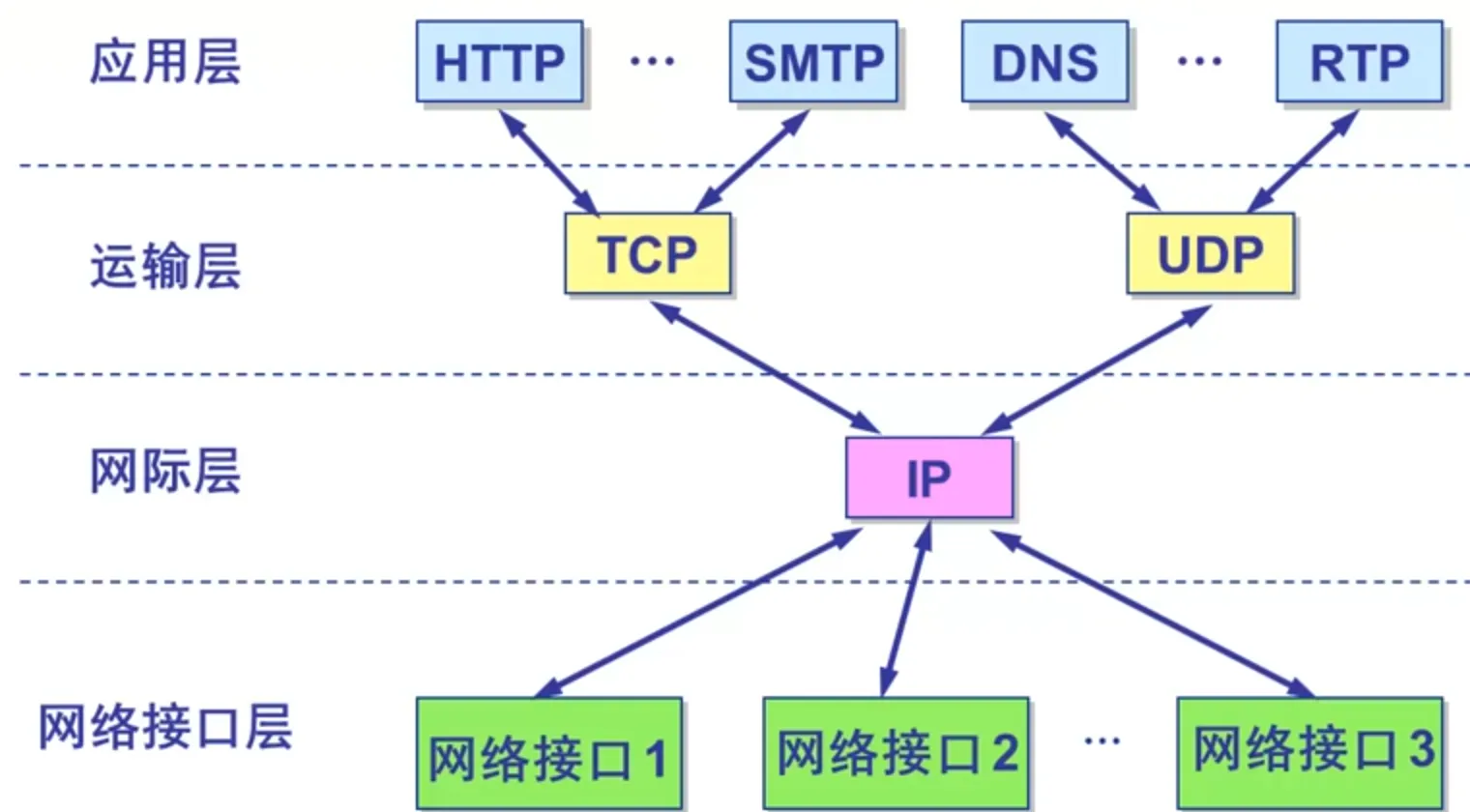
Five-Layer Model
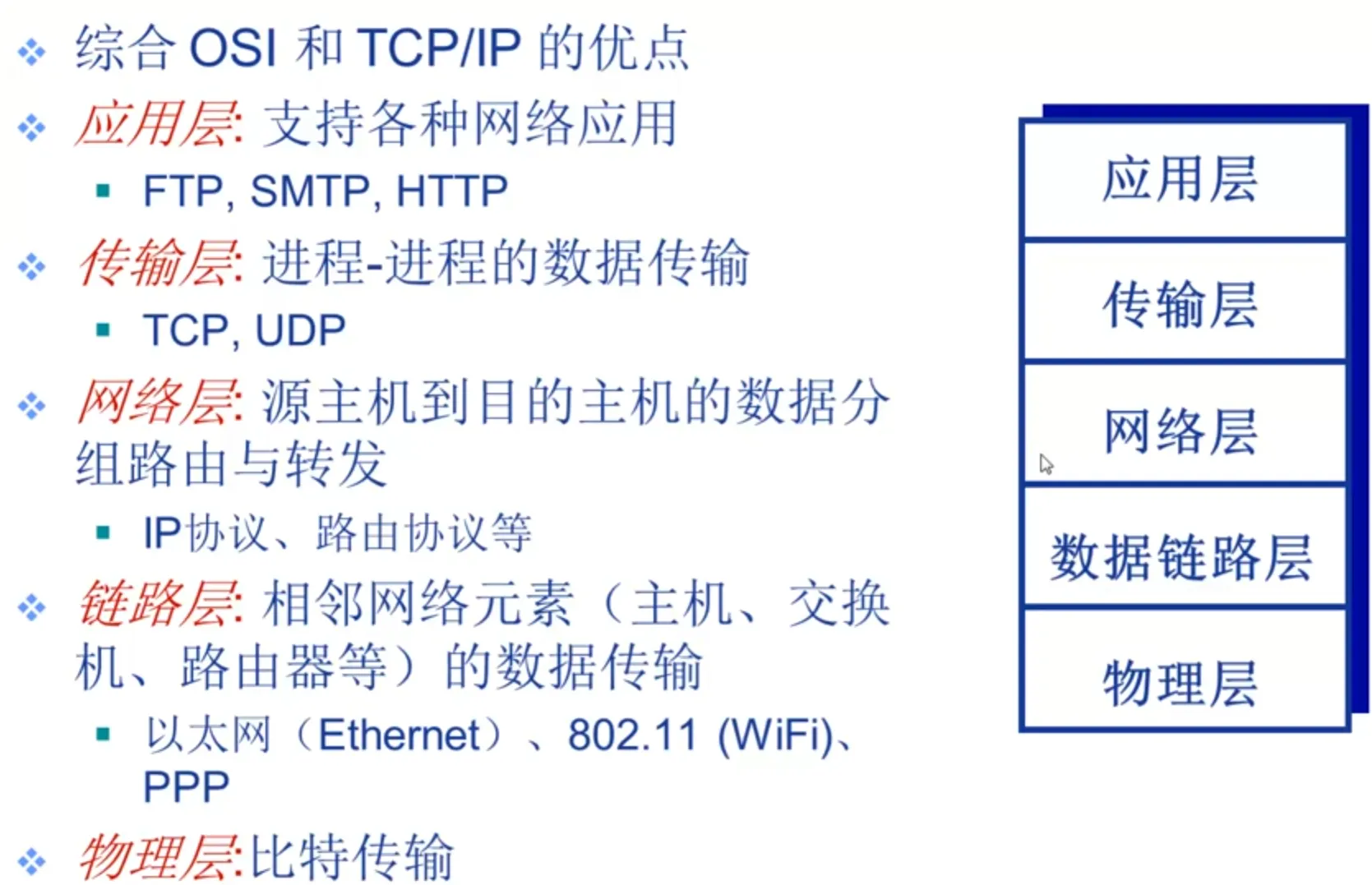
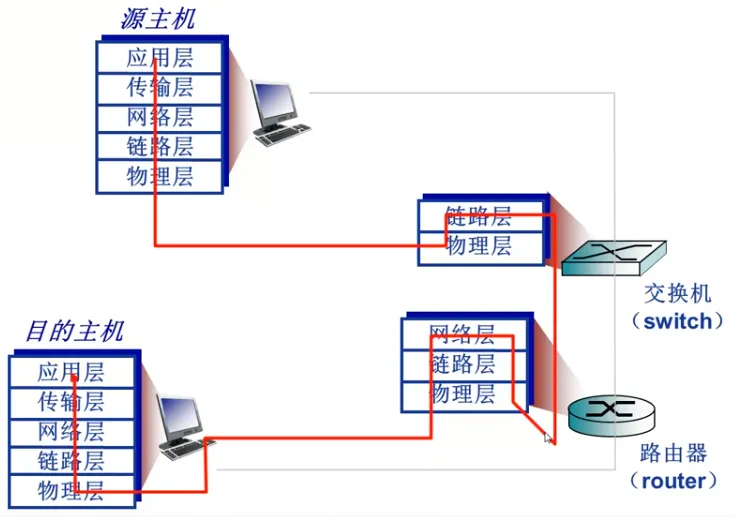
| Layer Name | Description | Protocol | Data Format |
|---|---|---|---|
| Physical Layer | Bit Transmission | None | Bit |
| Data Link Layer | Data transmission between adjacent network elements | Ethernet, 802.11(Wifi), PPP | Frame |
| Network Layer | Data packet routing and forwarding from source to destination | IP Protocol, Routing Protocols | Datagram |
| Transport Layer | Ensure message submitted to correct process | TCP, UDP | Segment |
| Application Layer | Support users using network | FTP, SMTP, HTTP | Message |
All content comes from sources, course copyright reserved. Document is for learning use only.
If there is any infringement, contact [email protected]
https://www.icourse163.org/learn/HIT-154005?tid=1474180488#/learn/announce
- Attribution: Retain the original author's signature and code source information in the original and derivative code.
- Preserve License: Retain the Apache 2.0 license file in the original and derivative code.
- Attribution: Give appropriate credit, provide a link to the license, and indicate if changes were made.
- NonCommercial: You may not use the material for commercial purposes. For commercial use, please contact the author.
- ShareAlike: If you remix, transform, or build upon the material, you must distribute your contributions under the same license as the original.